
Refinish or Replace Hardwood Floors?
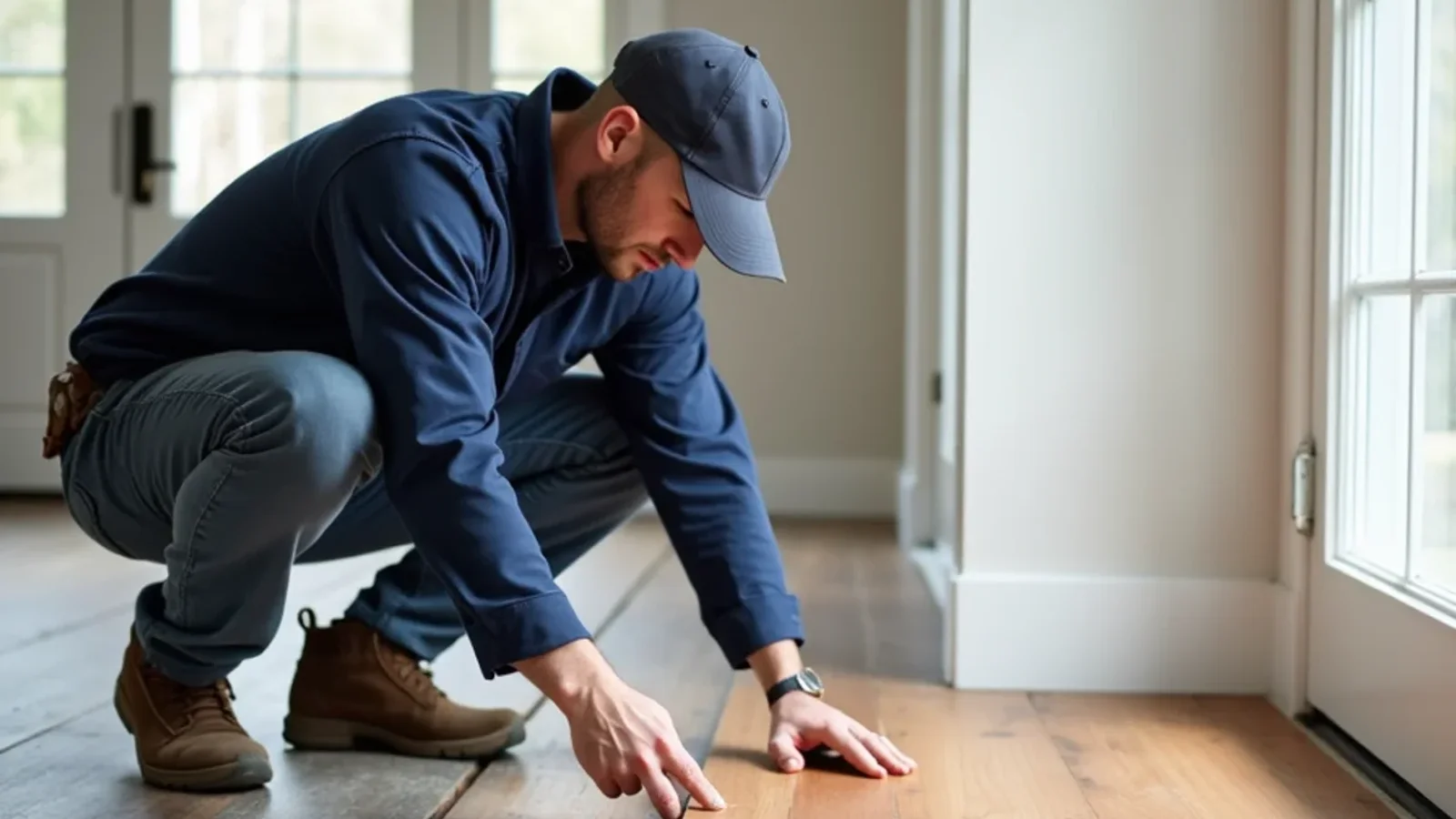
When remodeling a classic home in historic Atlanta neighborhoods like Decatur, Candler-McAfee, Kirkwood, or Virginia-Highland, encountering worn, yellowed, or squeaking hardwood floors presents a major financial crossroads: should you preserve and sand the existing timber, or tear it out and install brand-new wide-plank flooring? With professional dustless refinishing averaging $3.50 to $6.00 per square foot versus full tear-out and replacement ranging from $9.00 to $18.00 per square foot, refinishing offers an immediate 60% to 70% cost savings.
However, choosing to refinish is not purely a financial decision—it is dictated by physical structural thresholds. If previous sanding passes have worn down the timber to the top of the tongue-and-groove joint, or if decades of pet urine have deeply oxidized tannins into the cellular core of the oak, sanding will only expose brittle fasteners and unsightly gray shadows. Knowing how to systematically diagnose your floor’s remaining life expectancy prevents expensive mid-project surprises.
Get a Free On-Site Flooring Consultation
Speak directly with Pedro and the Diamond Epoxy Pros crew. We inspect your subfloor or concrete slab, test moisture levels, and provide a clear, itemized quote in writing.
- 5★ on Google (22 reviews)
- Fully Insured
- Free Written Estimates
- Lifetime Delamination Warranty
- Employees Only (No Subcontractors)
- Serving Metro Atlanta since 2023
The 4-Point Hardwood Assessment Framework: Measuring Sandability
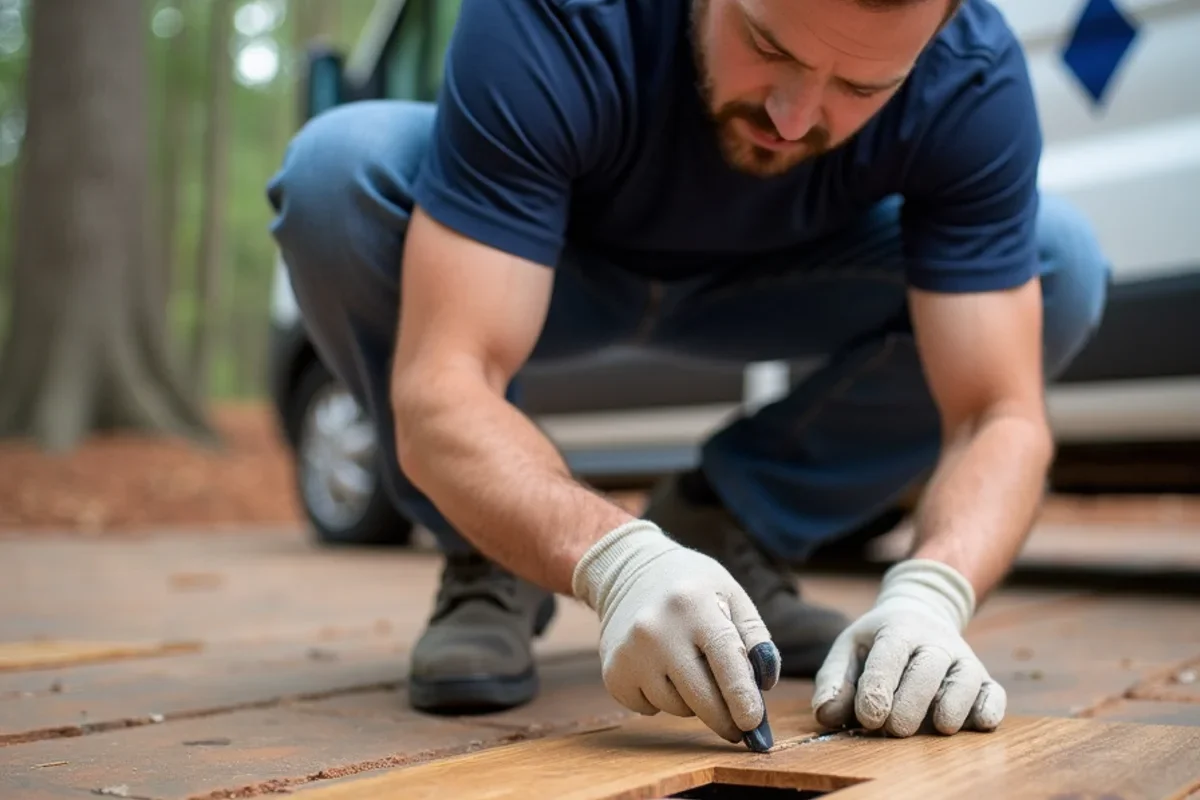
Before making any commitments, perform a physical inspection of the timber across multiple rooms to calculate the remaining sandable wood mass.
The HVAC Floor Register Depth Gauge Test
The most reliable way to evaluate solid hardwood without destructive testing is to lift an HVAC floor supply register and examine the exposed cut cross-section of the floorboards. Standard 3/4-inch solid tongue-and-groove hardwood is milled with roughly 5/16-inch (approx. 8mm) of usable timber above the tongue when brand new. Each professional sanding pass with a 220V continuous belt sander removes roughly 1/32-inch (0.8mm) of wood.
Using a digital depth caliper or fine ruler, measure the thickness of the wood layer remaining above the tongue. If you have 1/8-inch (3mm) or more of solid wood above the tongue, the floor can safely endure another 2 to 3 full refinishing cycles. However, if the wood measures less than 3/32-inch (2mm), or if blind flooring cleats and wire staple crowns are visibly poking through the surface, the floor has reached structural end-of-life; further sanding will shatter the upper lip of the groove.
Solid Timber vs. Engineered Hardwood Wear Layers
If your home has engineered hardwood rather than solid oak, inspect the decorative top veneer. High-end engineered hardwood features a 4mm to 6mm sawn dry-solid lumber wear layer that can be sanded and refinished 2 to 4 times, identical to solid wood. In contrast, builder-grade rotary-peeled engineered floors feature a paper-thin 1mm to 2mm veneer. Aggressive drum sanding on a 1.5mm veneer will cut straight through the hardwood into the cross-ply birch plywood core beneath, ruining the floor completely.
Fastener Exposure and Top-Nail Limitations
In older Atlanta bungalows and cottages, edge boards near baseboards and perimeter thresholds were often face-nailed with finish nails. If previous contractors countersunk and puttied these nails, subsequent sandings bring the steel nailheads flush with the surface. Once nailheads are exposed across the main field of the floor, the belt sander will strike steel, throwing sparks, tearing sanding belts, and leaving permanent circular friction burns in the oak.
When Pet Urine, Water Damage, and Cupping Require Board Replacement
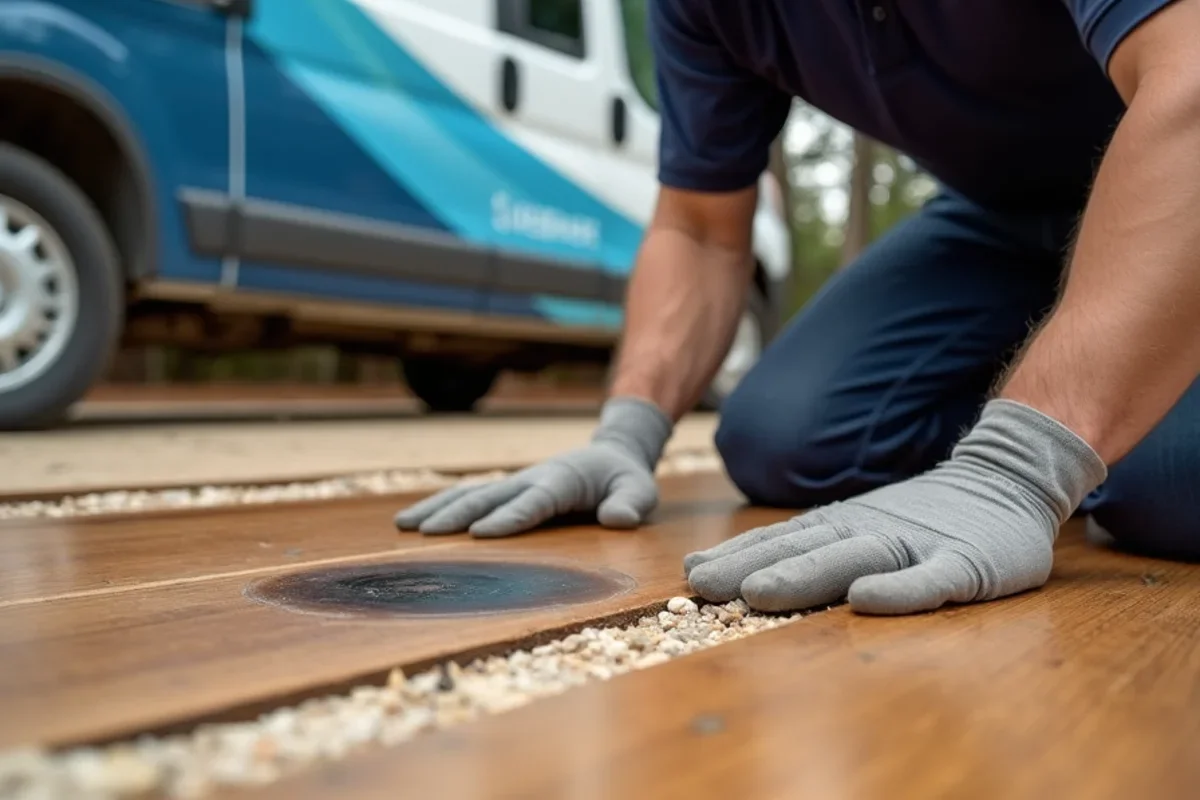
Surface scratches, minor heel dents, and ambered polyurethane can all be eliminated with a standard 36-grit coarse sanding pass. However, certain chemical and biological stains permanently alter wood chemistry.
Ammonia Oxidation and Tannin Staining (The Black Oak Phenomenon)
When dogs or cats repeatedly urinate on hardwood, uric acid and urea decompose into alkaline ammonia salts. In red and white oak species native to Georgia, ammonia reacts violently with the natural tannic acids stored inside the wood fibers, triggering a chemical oxidation process known as "ebonizing." This chemical reaction turns the wood a deep charcoal-black color that extends 1/4-inch to 1/2-inch deep into the board.
Bleaching black pet stains with oxalic acid or chlorine bleach rarely succeeds; at best, it turns the wood a chalky, sickly gray that rejects stain. When pet stains cover more than 20% to 30% of a room, board lacing or full floor replacement becomes the only aesthetic solution.
Board Lacing and Surgical Feathering vs. Total Tear-Out
If water damage from a localized radiator leak or pet staining is isolated to a specific corner, you do not need to discard the entire room. Technicians perform "board lacing" (also known as tooth-in repair): the damaged boards are plunged with a toe-kick saw, split down the center, and removed without damaging the surrounding tongues. New unfinished tongue-and-groove oak boards matching the exact width and grain are woven into the field, and the entire room is sanded continuously to achieve an undetectable color and sheen match.
Decision Criteria: Sand & Refinish vs. Full Hardwood Tear-Out
| Inspection Factor | Proceed with Sand & Refinish | Mandatory Full Replacement |
|---|---|---|
| Remaining Wear Layer | Equal to or greater than 1/8" above tongue | Less than 3/32" or nail heads exposed |
| Pet Urine / Water Stains | Isolated spots (< 10% area); suitable for lacing | Widespread black ammonia burns (> 30% area) |
| Board Width & Profile | Satisfied with existing 2-1/4" or 3-1/4" strip | Desire contemporary 7" to 9" wide-plank oak |
| Subfloor Stability | Sound subfloor; localized squeaks fixable | Severe structural rot; widespread joist deflection |
| Species & Grain Style | Classic American Red Oak, White Oak, Heart Pine | Desire exotic species or wire-brushed texture |
| Turnkey Budget / sq. ft. | $3.50 – $6.00 per sq. ft. (High ROI) | $9.00 – $18.00+ per sq. ft. (Full capital investment) |
Cost and Timeline Comparison: Refinish vs. Full Replacement in Atlanta
Refinishing Economics: Dustless Planetary Sanding and Bona Traffic HD
In 2026, professional hardwood refinishing in metro Atlanta costs $3.50 to $6.00 per square foot. This includes rough sanding with heavy 220V continuous belt machines, edge sanding, planetary multi-head rotary disc screening to remove swirl marks, custom stain application, and three coats of commercial-grade waterborne polyurethane (such as Bona Traffic HD or Loba 2K InvisibleProtect). For a typical 1,000-square-foot main living area, refinishing costs between $3,500 and $5,500 and takes 3 to 5 business days.
Replacement Economics: Demolition, Disposal, Subfloor Prep, and New Planks
Full replacement involves significantly more labor and material logistics. Tearing out existing solid hardwood glued or blind-nailed over plywood costs $2.00 to $3.50 per square foot, plus dumpster disposal fees ($450 to $700). Installing new 3/4-inch prefinished or site-finished white oak costs $5.00 to $10.00/sq. ft. for materials and $3.50 to $5.50/sq. ft. for installation labor, bringing the turnkey cost to $10.50 to $19.00+ per square foot ($10,500 to $19,000 for 1,000 sq. ft.).
Style Evolution: Upgrading from 2-1/4" Strip to Modern 7" Wide-Plank Oak
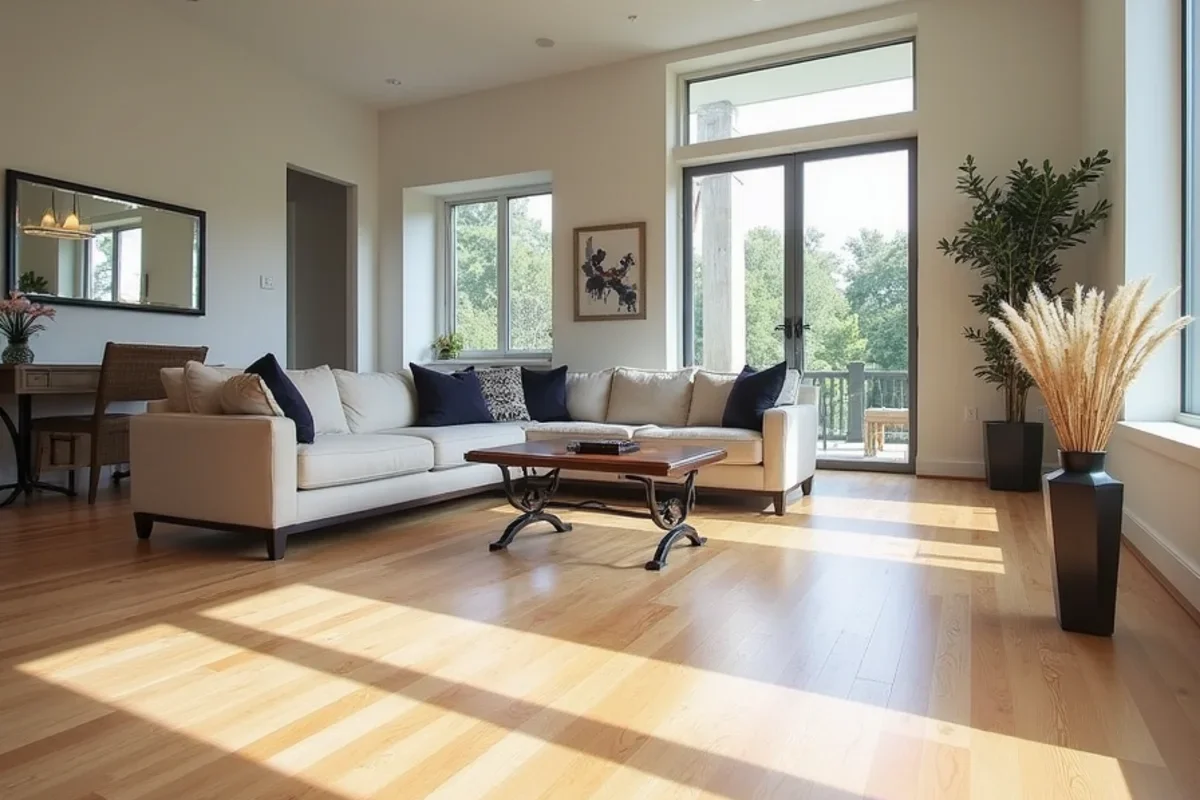
Sometimes the decision to replace has nothing to do with wear and everything to do with architectural proportions and contemporary interior design.
The Visual Limitations of Existing 1950s Narrow Strip Flooring
Most post-WWII Atlanta homes built between 1945 and 1975 feature 2-1/4-inch narrow red oak strip flooring. While charming and historically authentic, narrow strip flooring creates a busy, repetitive visual grid across open-concept layouts. Homeowners seeking a clean, expansive Scandinavian or modern transitional aesthetic frequently choose to replace narrow strips with 7-inch, 8-inch, or 9-inch wide European white oak planks.
Color Transformations: Nordic Blonde, Invisible Raw, and Bleached Tones
If you choose to refinish, modern stain chemistry allows dramatic aesthetic transformations. Older Atlanta floors were traditionally coated with oil-modified polyurethane that turned an amber, honey-orange shade over time. Professional dustless sanding strips the wood back to bare timber. Applying reactive waterborne sealers (like Bona ClassicSeal or NordicSeal) mutes red and yellow undertones, producing soft Scandinavian raw-wood finishes or crisp pale white-washed tones without yellowing.
Environmental and Resale Value Considerations
Preserving Historic Old-Growth Timber
Homes built in Atlanta prior to 1940 often feature old-growth longleaf heart pine or slow-growth Appalachian red oak. These vintage timbers possess tight growth rings, extreme hardness, and rich patina that cannot be purchased from modern fast-growth lumber mills today at any price. Preserving and restoring these vintage floors keeps historic architectural heritage intact and prevents tons of usable timber from entering local landfills.
Appraisal Appeal Across Fulton and DeKalb County Markets
From an appraisal standpoint, real estate agents confirm that freshly refinished historic hardwood floors generate virtually identical buyer enthusiasm as brand-new hardwood installations. Spending $4,500 to refinish existing oak yields an immediate 100%+ return on equity at sale, whereas spending $16,000 on new hardwood rarely recovers the additional $11,500 investment in sale price.
Frequently Asked Questions
- Remove an HVAC floor supply register and measure the cross-section of the floorboards. You need at least 1/8-inch (3mm) of solid wood above the tongue-and-groove joint to safely sand the floor. If the wood above the tongue measures less than 3/32-inch, or if nail heads and staple crowns are exposed across the surface, the floor has reached its end of life and must be replaced.